Students of the Philology program at the University of Information Technology and Management (UITM) in Rzeszów recently had a unique opportunity to participate in two international academic lectures organized as part of American literature classes and the activities of the interdisciplinary student research club Humanus. These events reflect the university’s ongoing strategy of internationalization and the development of students’ interpretative and critical-thinking skills through contact with scholars from different parts of the world.
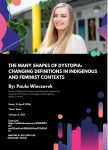
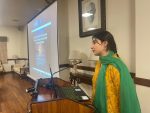
The first lecture took place on April 21 and was delivered by Dr. Paula Wieczorek. Her presentation, titled “The Many Shapes of Dystopia: Changing Definitions in Indigenous and Feminist Contexts,” focused on the changing contemporary understanding of dystopia as both a literary genre and a tool of social critique. During the lecture, it was emphasized that classical Western models of dystopia — based on visions of totalitarian states or technological control — no longer fully capture modern experiences of crisis.
Special attention was devoted to Indigenous narratives and feminist perspectives, which redefine dystopia by addressing issues such as colonialism and environmental degradation. The lecture referred to contemporary literary works, including Future Home of the Living God by American Ojibwe writer Louise Erdrich, demonstrating how speculative fiction can serve to reinterpret history and imagine alternative futures.
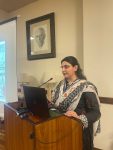
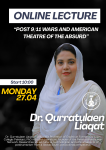
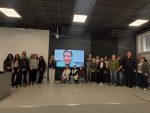
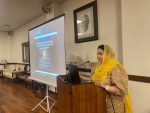
The second lecture, held on April 27, was conducted by Professor Qurratulaen Liaqat from Forman Christian College in Pakistan. Her lecture, “Post 9/11 Wars and American Theatre of the Absurd,” offered an in-depth analysis of the relationship between the experience of war and the aesthetics of absurdity in literature and theatre.
The starting point for the discussion was Bengal Tiger at the Baghdad Zoo by contemporary American playwright Rajiv Joseph, known for exploring themes of war, identity, and migration. The speaker demonstrated how the Theatre of the Absurd becomes an appropriate language for describing realities marked by armed conflict, violence, and trauma. In extreme situations such as war, traditional forms of narration often prove insufficient, while absurdity allows artists to convey experiences of chaos, disorientation, and existential crisis.
An important part of the lecture was also the connection between the discussed literary phenomena and contemporary armed conflicts. Professor Liaqat pointed to parallels between the analyzed texts and current world events, including the war in Ukraine, emphasizing the universal nature of trauma and the need to seek new forms of expressing it through literature and art.
Both lectures concluded with lively and inspiring discussions. Students actively participated by asking questions concerning both the analyzed texts and broader cultural and social contexts. These meetings not only broadened participants’ knowledge but also helped develop their critical thinking skills, cultural text analysis, and interpretation of global phenomena.
It is also worth emphasizing that cooperation with Professor Qurratulaen Liaqat has been developing since 2024, when the researcher — together with her students — participated in the Shapes of Dystopia conference held on May 14, 2024. This collaboration later resulted in joint publications in a special issue of the journal Social Communication, dedicated to contemporary approaches to dystopia.
These lectures are an excellent example of the synergy between teaching and academic research and confirm the importance of international cooperation in philology education. Thanks to such initiatives, students have the opportunity to participate in global academic dialogue and develop competencies essential for today’s labor market and the world of science.