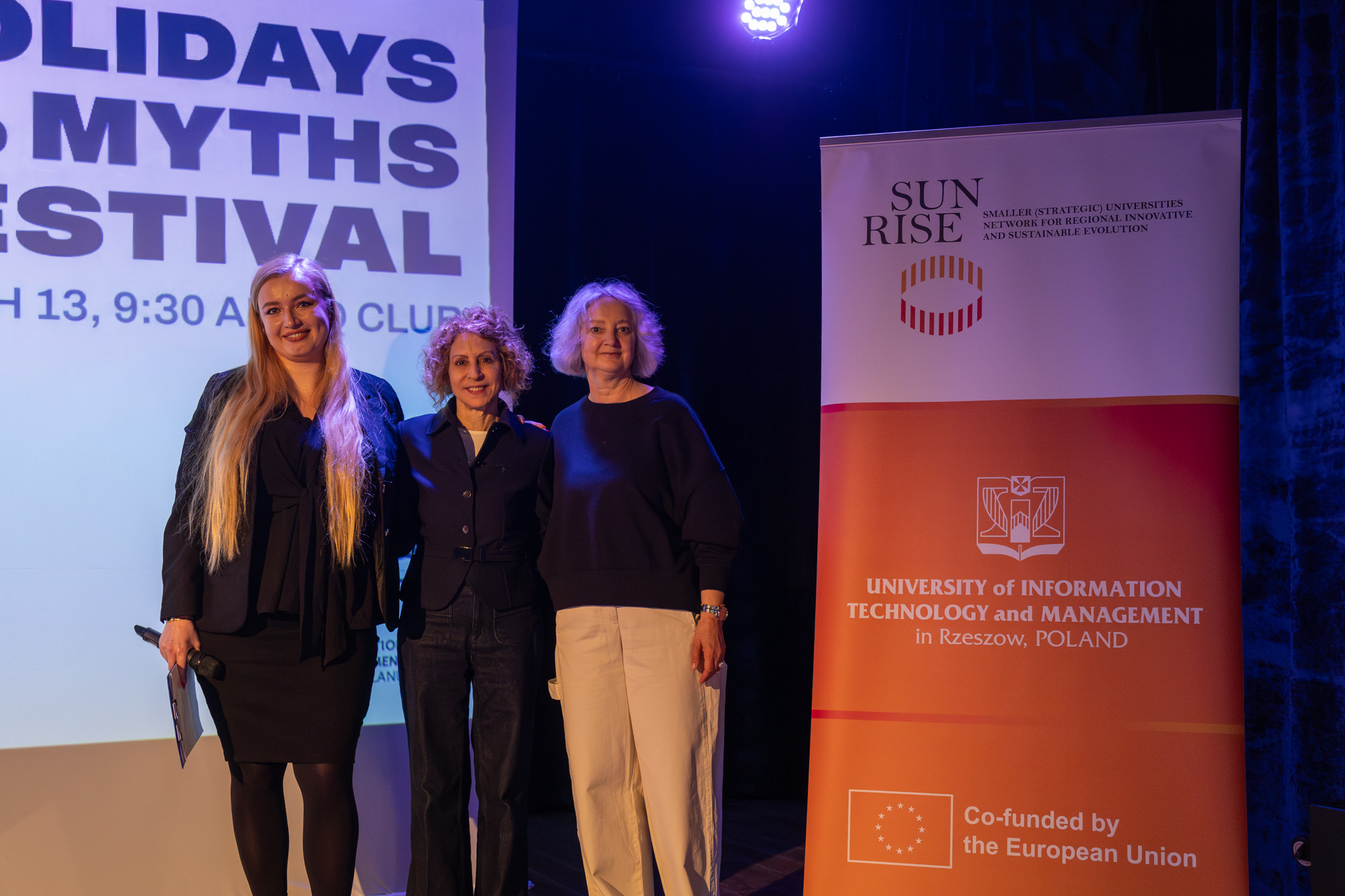
On March 13, 2026, the third edition of the unique event – the “Holidays and Myths Festival” – took place at the IQ Club of the University of Information Technology and Management in Rzeszów. Organized by the Humanus Interdisciplinary Research Club, the festival once again took students and secondary school pupils on a fascinating journey through cultures, beliefs, and traditions from around the world.
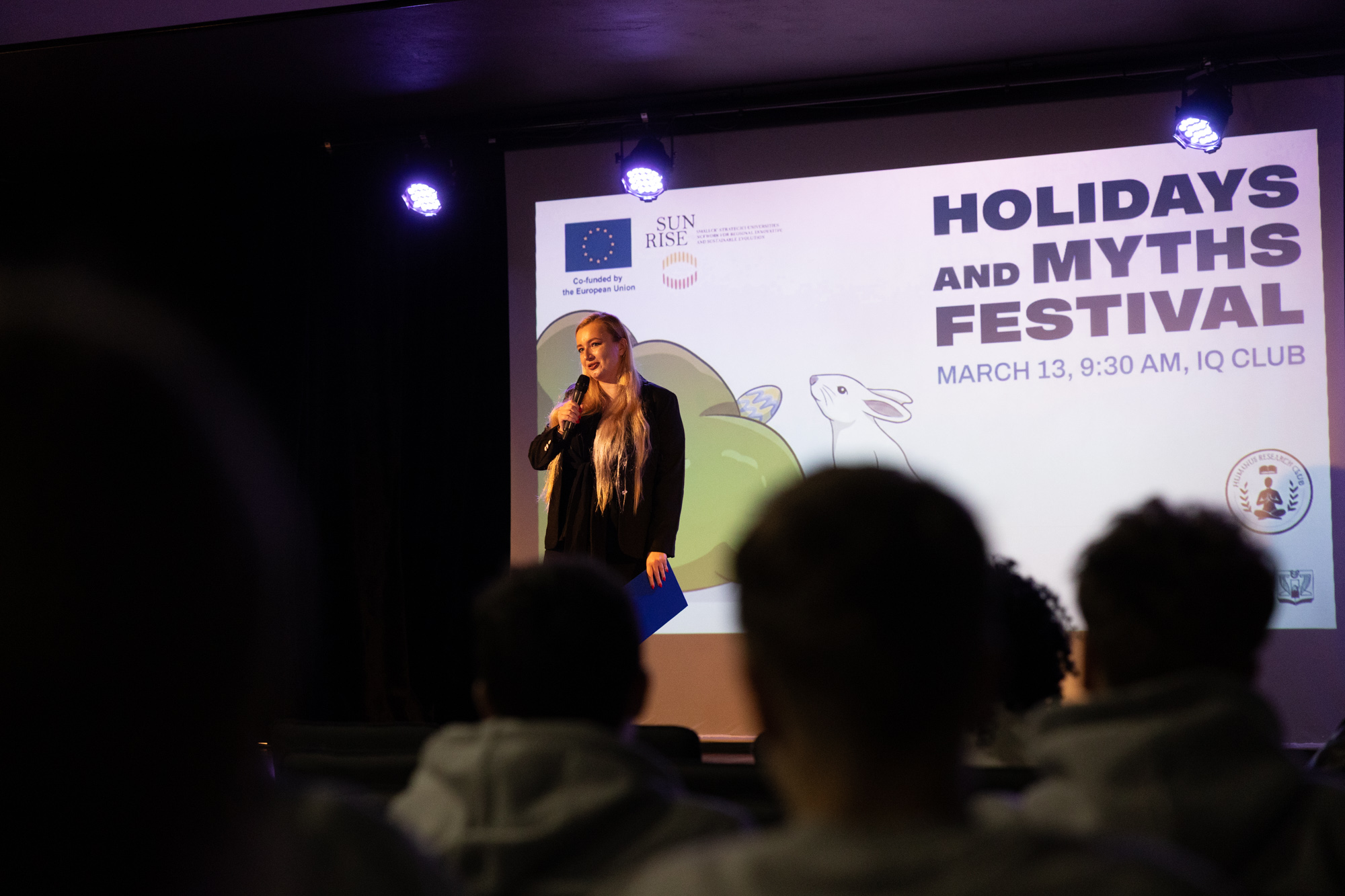
“This event has become something of a tradition for us. Each year we gather to explore stories, myths, and holiday traditions from different parts of the world and to learn how cultures express their values through narratives, shared celebrations, and collective memory,” said Dr. Paula Wieczorek, the festival coordinator, while opening the event.
Special Guest from St. John’s University in New York
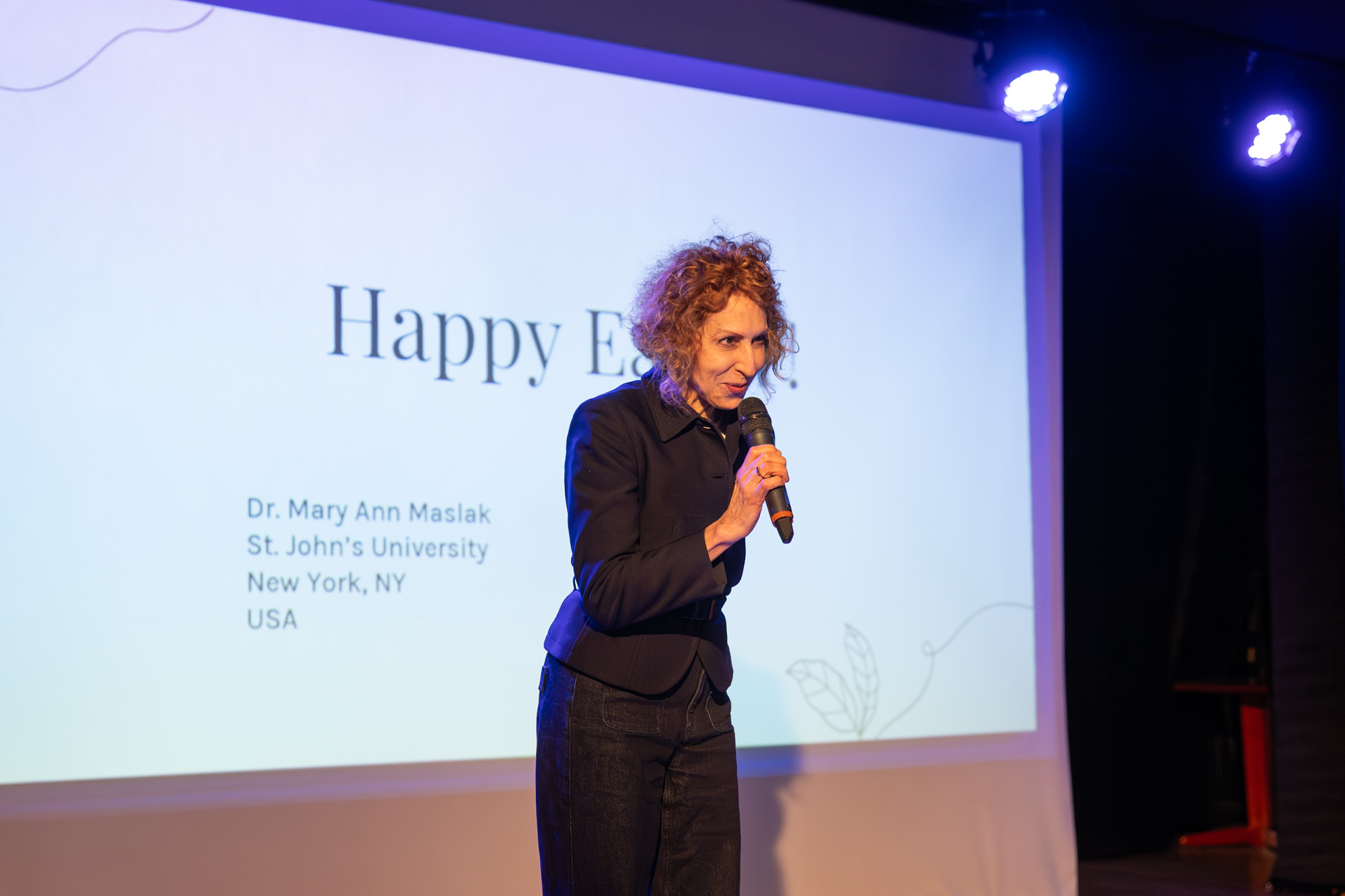
A highlight of the program was the lecture delivered by the special guest, Dr. Mary Ann Maslak, Professor at the School of Education at St. John’s University in New York. The American scholar introduced the audience to Easter traditions in the United States, highlighting both similarities and differences between religious and secular ways of celebrating the holiday.
Participants learned about popular customs such as the Easter egg hunt, festive parades, and the figure of the Easter Bunny, as well as the religious dimension of Holy Week and its significance in American culture.
Myths and Stories from Around the World
The festival also provided an opportunity to listen to presentations prepared by international students of UITM involved in the Humanus Interdisciplinary Research Club.
Katsiaryna Zubrytskaya, a graduate of English Philology at UITM, presented the richness of Belarusian folklore and traditional stories passed down from generation to generation.
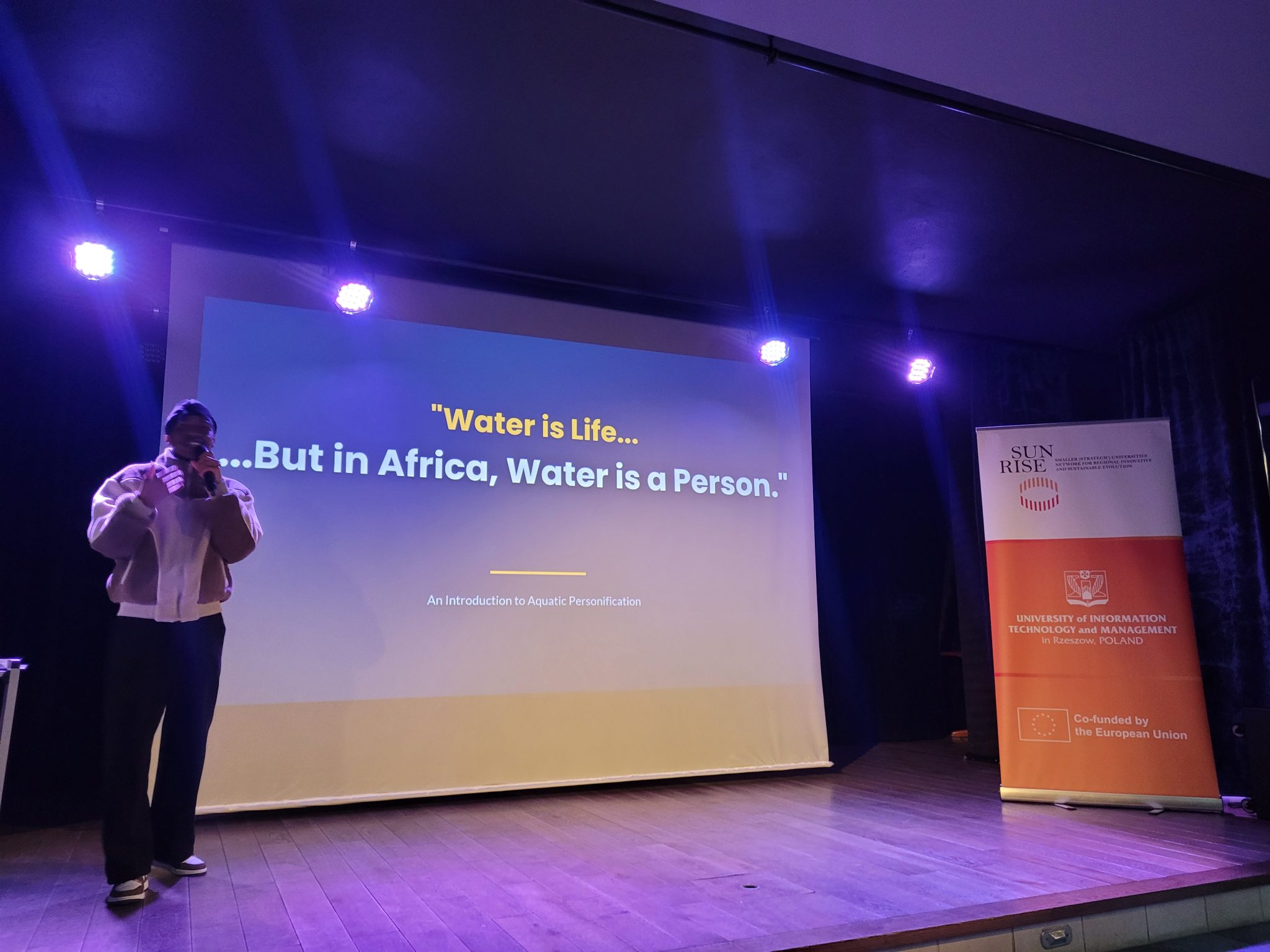
Rumbidzo Chando and Donald Matsheza introduced the legend of Nyami Nyami, the powerful god of the Zambezi River, revered by the Tonga people of Zimbabwe. Their presentation illustrated how traditional beliefs intertwine with the colonial history of the region. The construction of the Kariba Dam in the 1950s led to the displacement of thousands of local residents and symbolically “divided” the river believed to be the home of the deity. Devastating floods during the construction were interpreted as the anger of Nyami Nyami. Today, the legend is often seen as a metaphor for the historical upheavals and trauma associated with colonial infrastructure projects.
Nashe Mukechi introduced the audience to the world of African water spirits, discussing figures such as Mami Wata and Yemoja. Mami Wata—translated as “Mother Water”—is one of the most recognizable figures in the mythology of West and Central Africa. She is often depicted as a beautiful mermaid entwined with a serpent, symbolizing the connection between water and land. Interestingly, the modern image of Mami Wata was strongly influenced by a nineteenth-century European poster depicting a snake charmer, which reached Africa through historical trade routes. In many places, the worship of Mami Wata combines traditional beliefs with elements of contemporary material culture.
Cooperation with Secondary Schools
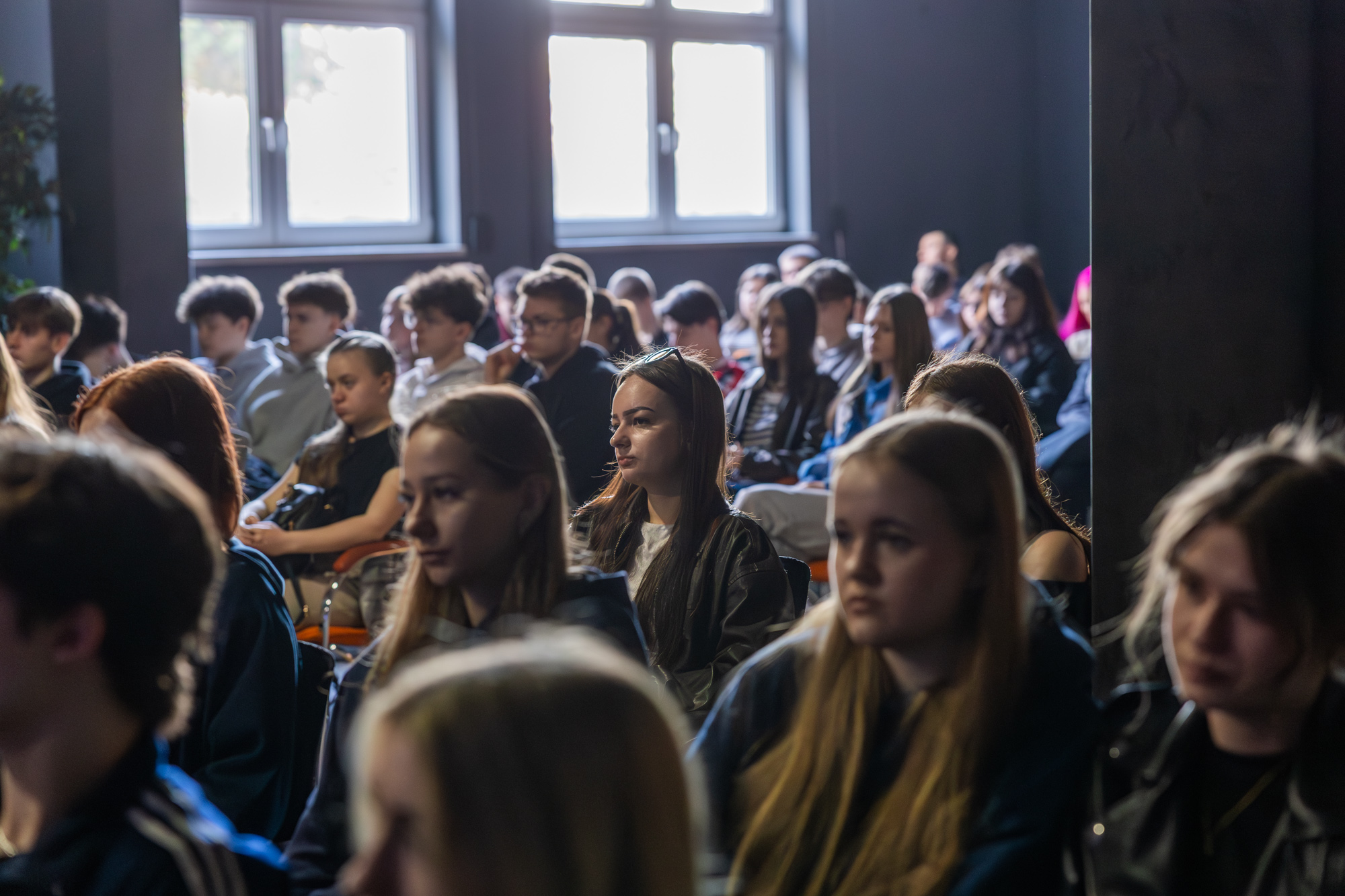
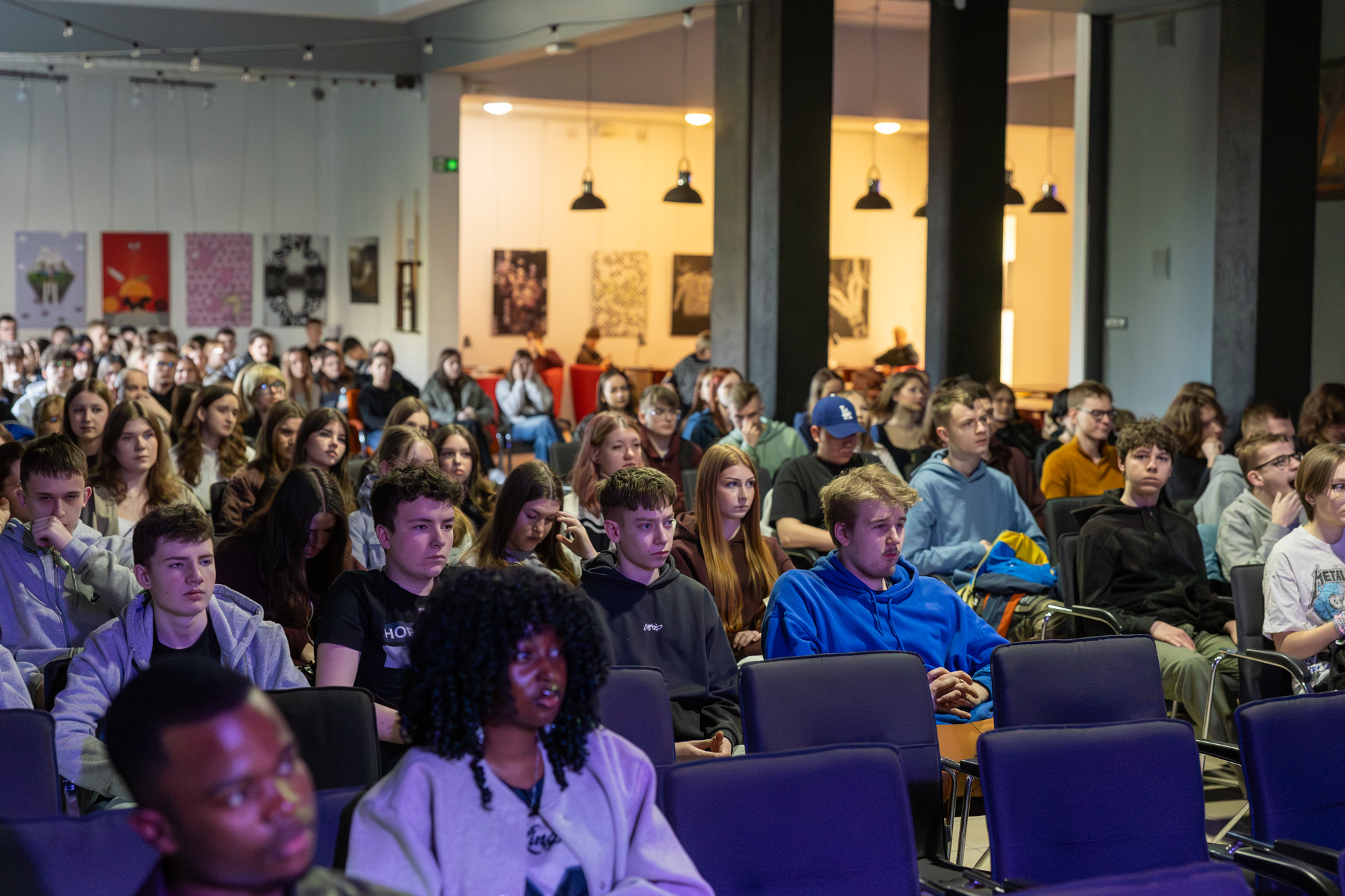
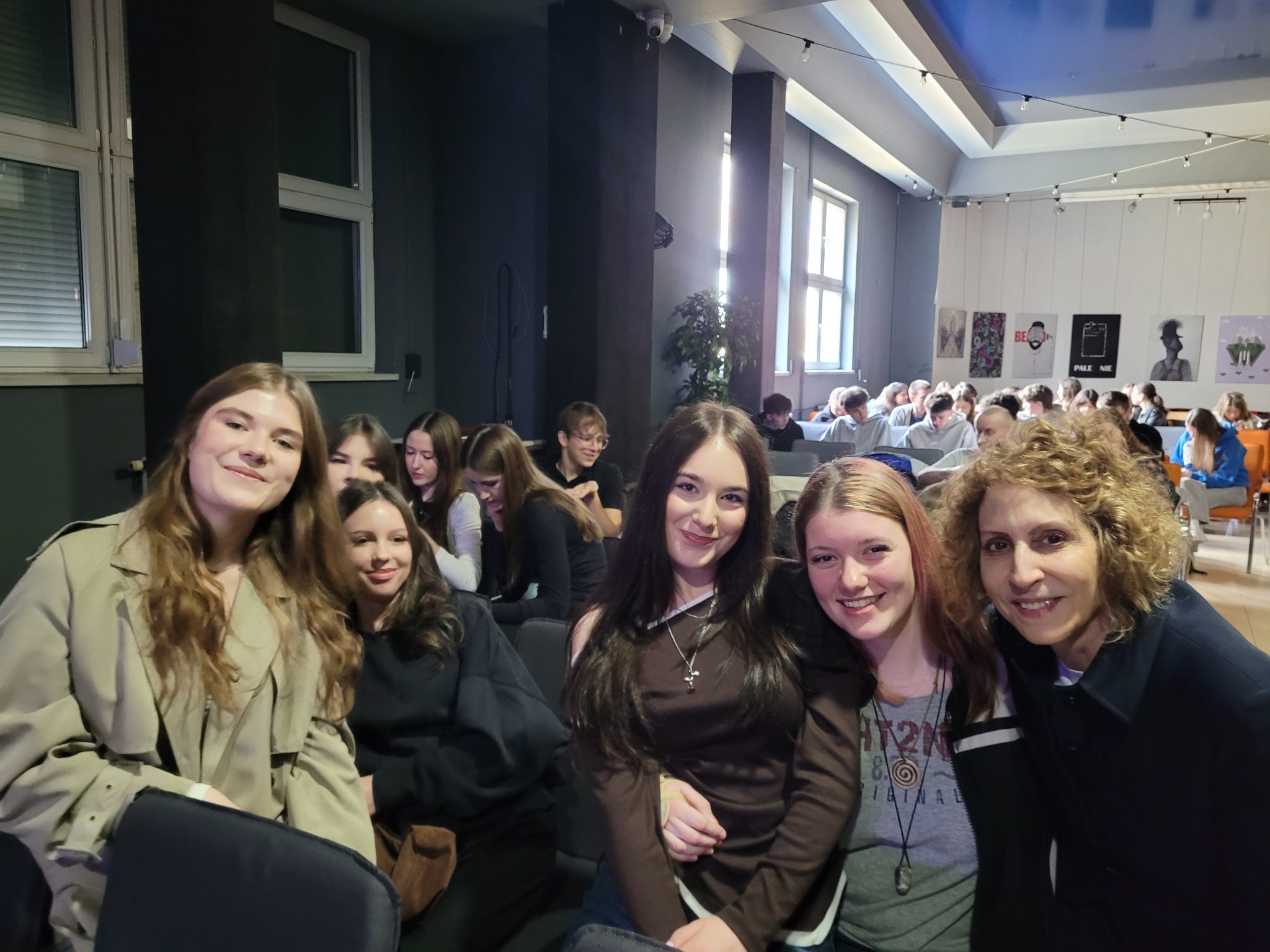
The event also attracted a large group of secondary school students. Participants included pupils from Zespół Szkół nr 3 in Rzeszów, I High School in Dębica, and Piotr Skarga High School in Sędziszów Małopolski.
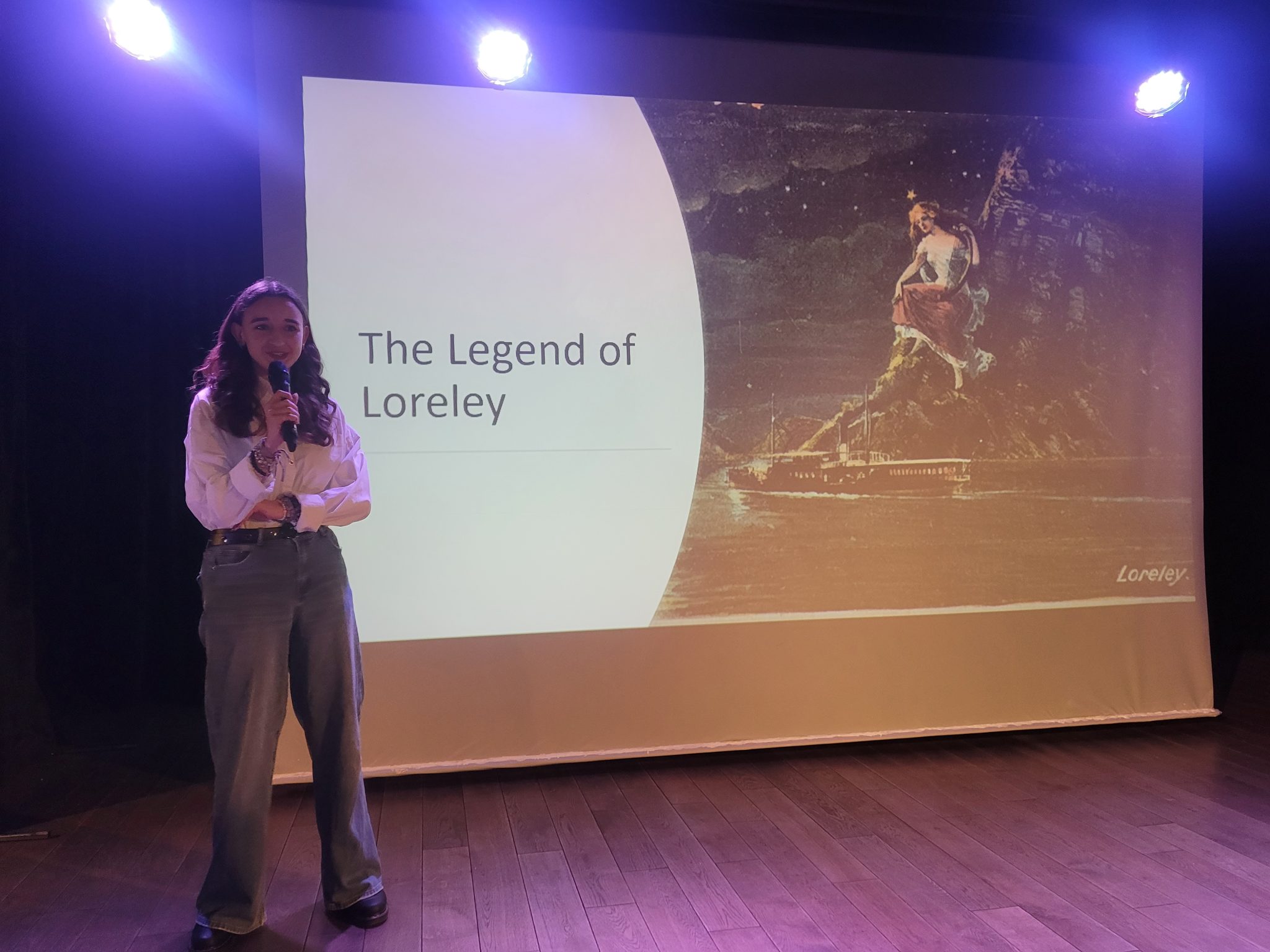
Particularly notable were the students from IX High School in Rzeszów, who prepared their own presentations in English. Their talks introduced the audience to topics such as British myths and legends (Maja Leja), the Irish legend of the “Children of Lir” (Aleksandra Herda and Aleksandra Ciasnocha), and the famous German legend of Lorelei—a mysterious siren on the Rhine whose enchanting song, immortalized in Heinrich Heine’s poem, was believed to lure sailors to their doom.
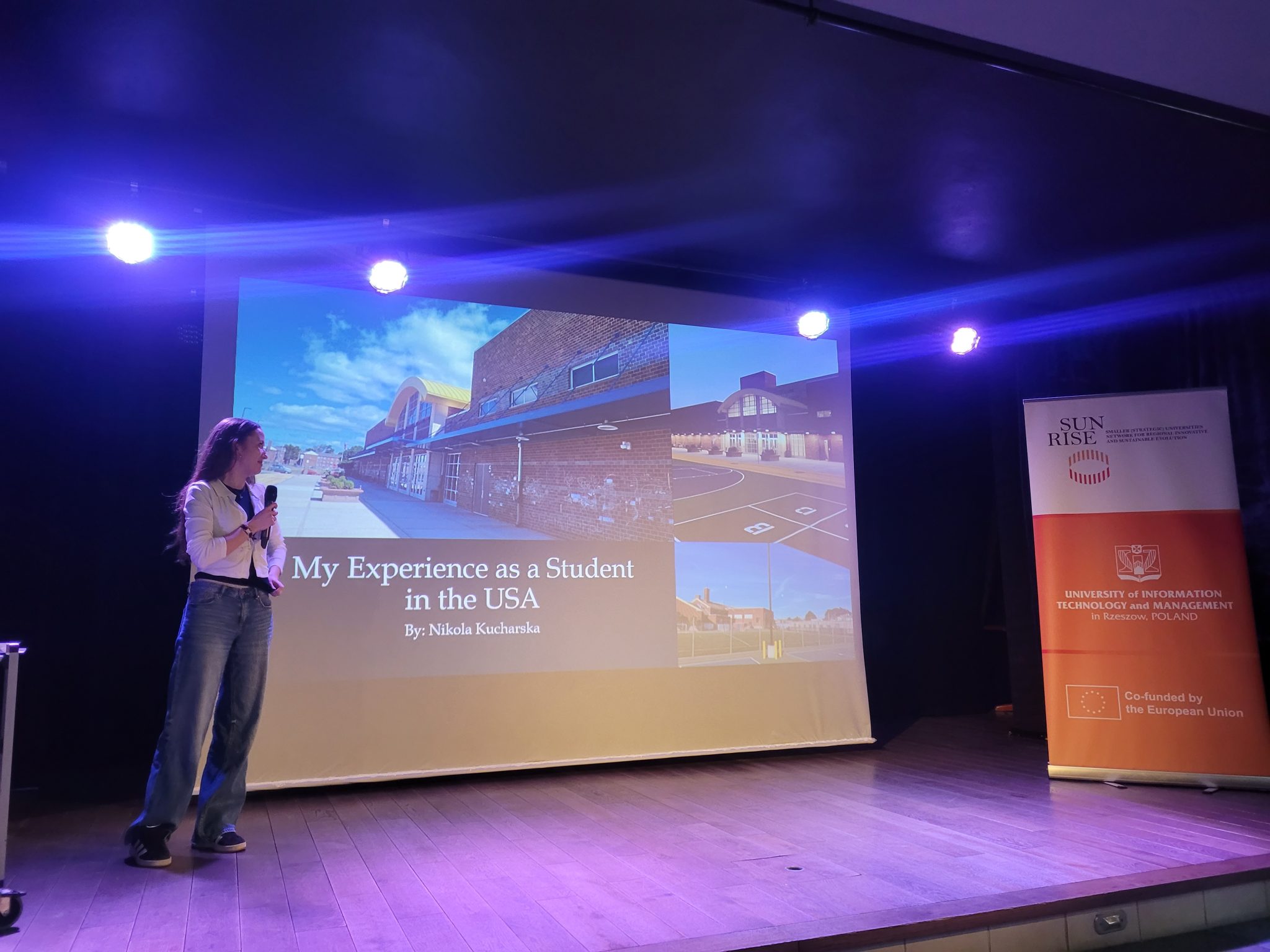
Aleksandra Afojna presented the story of the Nigerian goddess Yemoja, while Nikola Kucharska offered a personal and practical perspective on the American education system.
More Than Language Learning
This year’s edition of the festival once again demonstrated that learning foreign languages is inseparable from discovering the histories, myths, and worldviews of different cultures.
The event was organized as part of the university project “Cultural Adaptation – Language Development and Multiculturalism.” The festival also aligned with initiatives carried out within the prestigious SUNRISE project, which promotes intercultural dialogue, international cooperation, and a global perspective in education.
As emphasized by Dr. Paula Wieczorek, learning a foreign language is not only about mastering vocabulary and grammar, but above all about understanding the histories, traditions, and ways of thinking of other cultures.